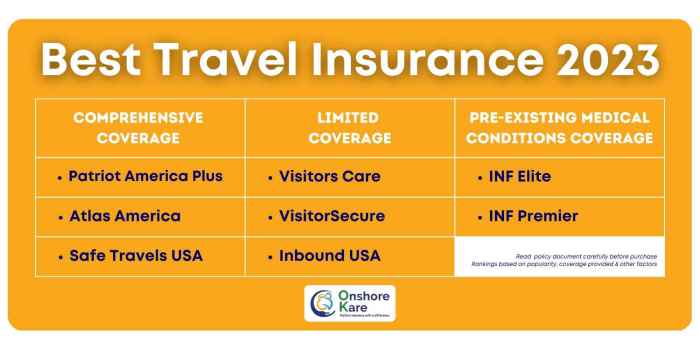
Planning an international adventure in 2024? Securing the right travel insurance is paramount. This guide navigates the complexities of choosing the best coverage, comparing top providers, and understanding crucial policy details to ensure a worry-free journey. We’ll delve into essential coverage components, factors influencing costs, and provide practical tips for navigating insurance policies and filing claims. Prepare for a seamless and secure travel experience.
From understanding the nuances of comprehensive versus basic plans to identifying key factors like trip length and destination, we aim to equip you with the knowledge necessary to make an informed decision. We’ll explore real-world scenarios and offer actionable advice to help you choose a travel insurance policy that perfectly aligns with your individual needs and travel style.
Top International Travel Insurance Providers in 2024
Choosing the right international travel insurance is crucial for a worry-free trip. Unexpected events, from medical emergencies to trip cancellations, can quickly become costly without adequate coverage. This section will compare leading providers to help you make an informed decision.
Top International Travel Insurance Providers: A Comparison
Selecting the best travel insurance provider depends on individual needs and priorities. The following table compares five leading providers, focusing on key aspects to consider. Note that coverage details and pricing can vary based on trip specifics, such as destination, duration, and age of travelers. Customer ratings represent a snapshot in time and may fluctuate.
| Provider | Coverage Highlights | Pricing | Customer Rating (Example – based on hypothetical average) |
|---|---|---|---|
| World Nomads | Comprehensive medical coverage, trip cancellation, emergency medical evacuation, lost luggage, 24/7 assistance | Varies greatly depending on trip details; generally mid-range to high pricing. | 4.5 stars |
| Allianz Travel Insurance | Wide range of plans, including options for adventure activities; strong medical coverage; good customer service reputation. | Prices vary widely depending on the plan chosen and trip details; generally mid-range to high. | 4.2 stars |
| Travel Guard | Known for robust coverage options, including options for pre-existing conditions (with limitations); strong reputation for claims processing. | Pricing tends to be on the higher end, reflecting the extensive coverage offered. | 4.0 stars |
| Squaremouth | Acts as a comparison site, allowing you to compare plans from multiple providers; helpful for finding the best fit for your needs. | Pricing varies greatly depending on the chosen plan from the underlying provider. | 4.3 stars |
| SafetyWing | Primarily targets digital nomads and long-term travelers; offers affordable, flexible plans with global coverage. | Generally lower-priced than comprehensive plans from other providers, but coverage may be less extensive. | 4.1 stars |
Key Factors to Prioritize When Selecting International Travel Insurance
Several key aspects should guide your decision when purchasing international travel insurance. These factors significantly impact the value and effectiveness of your policy.Choosing the right policy requires careful consideration of these crucial aspects to ensure adequate protection during your travels.
Prioritizing these three factors—coverage, cost, and customer reviews—will help ensure that you choose a travel insurance policy that meets your specific needs and provides peace of mind while traveling internationally.
Comprehensive vs. Basic Travel Insurance Plans
Comprehensive and basic travel insurance plans differ significantly in the scope of their coverage. Understanding these differences is vital for choosing a policy that adequately protects you.A comprehensive plan typically includes extensive coverage for medical emergencies, trip cancellations, lost luggage, and other unforeseen events. A basic plan, on the other hand, offers more limited coverage, often focusing primarily on essential medical expenses.
The choice between the two depends largely on your risk tolerance and the type of trip you’re planning. For instance, a traveler on an adventurous backpacking trip would likely benefit more from a comprehensive plan, while someone on a short, low-risk city break might find a basic plan sufficient.
Essential Coverage for International Trips
Planning an international trip requires careful consideration of potential risks. Investing in comprehensive travel insurance is a crucial step to mitigate these risks and protect your financial well-being and personal safety. This section Artikels the essential coverage components you should look for in a travel insurance policy for your 2024 adventures.
Choosing the right travel insurance policy involves understanding the various coverage components and their importance. A policy that only covers basic medical expenses might leave you vulnerable to significant financial losses in the event of a serious accident or illness abroad. Thorough research and careful selection are paramount.
Medical Emergencies
Comprehensive medical emergency coverage is paramount when traveling internationally. This should include coverage for hospitalizations, doctor visits, emergency medical transport (including air ambulance), and prescription medications. The policy should ideally have a high coverage limit, considering the potentially exorbitant costs of medical care in some countries. For example, a simple broken bone treated in a private hospital in certain European countries can easily cost tens of thousands of dollars.
This coverage extends beyond basic first aid and addresses situations requiring extensive medical intervention.
Trip Cancellations and Interruptions
Unexpected events can disrupt even the most meticulously planned trips. Trip cancellation insurance covers the non-refundable costs of your trip if you need to cancel due to unforeseen circumstances such as a serious illness, a family emergency, or severe weather conditions rendering travel unsafe. Trip interruption insurance protects you if your trip is cut short due to similar events.
For instance, if a volcanic eruption forces the cancellation of your flights, this coverage could reimburse you for unused portions of your airfare and accommodations.
Lost or Delayed Luggage
Lost or delayed luggage is a frustrating inconvenience that can quickly turn into a costly problem. Travel insurance with lost or delayed luggage coverage will reimburse you for the cost of essential items purchased while your luggage is missing, as well as the cost of replacing lost or damaged belongings. Imagine arriving in a foreign country with only the clothes on your back – this coverage can alleviate the stress and expense of such a situation.
A realistic example would be reimbursement for purchasing essential toiletries, clothing, and medications until your luggage is recovered.
Emergency Evacuation and Repatriation
In severe circumstances, emergency medical evacuation might be necessary. This coverage will transport you from a remote location or a country with inadequate medical facilities to a hospital with better resources, or even back to your home country. Repatriation covers the cost of transporting your remains back home in case of death abroad. This is a critical component, especially for those traveling to remote or less developed areas.
For example, someone injured while trekking in the Himalayas might require a costly helicopter evacuation to receive appropriate medical care.
Pre-existing Medical Conditions
Many policies offer coverage for pre-existing medical conditions, but it often requires disclosing these conditions during the application process and potentially paying a higher premium. It’s crucial to read the policy’s fine print carefully to understand the limitations and exclusions regarding pre-existing conditions. For example, someone with a history of heart problems might need to obtain specific approval for coverage related to their condition, but could still be covered for other incidents like a broken leg sustained during the trip.
Failing to disclose pre-existing conditions could invalidate your claim.
Factors Influencing Travel Insurance Costs

Several key factors interact to determine the final cost of your international travel insurance. Understanding these influences allows you to make informed decisions and potentially save money while ensuring adequate coverage. These factors are not independent; they often influence each other, resulting in a complex pricing structure.Several factors significantly impact the cost of international travel insurance. These include the length of your trip, your chosen destination, your age, and the level of activity you plan to undertake.
A higher risk profile generally translates to a higher premium.
Trip Length
The longer your trip, the higher your premium will likely be. Insurance companies assess risk over time; a longer trip exposes you to more potential incidents requiring medical attention or other forms of assistance. For example, a two-week trip to Europe might cost significantly less than a year-long backpacking adventure across Southeast Asia. This is because the probability of needing assistance increases proportionally with the duration of the trip.
Destination
Your destination plays a crucial role in determining your premium. Countries with higher risks of natural disasters, political instability, or prevalent health concerns will generally result in higher insurance costs. A trip to a remote area with limited medical facilities will cost more to insure than a trip to a major city in a developed country with readily available healthcare.
For instance, travel insurance to a region prone to earthquakes or hurricanes would command a higher price than a trip to a country with a stable political climate and robust healthcare infrastructure.
Age
Age is another significant factor. Older travelers generally face higher premiums because of a statistically higher likelihood of requiring medical attention. Pre-existing medical conditions can also significantly influence the cost, potentially leading to higher premiums or even exclusion from coverage. For example, a 70-year-old traveler will likely pay more than a 30-year-old traveler, reflecting the increased risk associated with age.
Activity Level
The type of activities you plan to undertake also impacts the cost. Adventure sports like mountain climbing, scuba diving, or skiing are considered high-risk activities and will result in higher premiums. Conversely, a relaxing beach vacation will typically have a lower premium. For example, a traveler participating in extreme sports will pay substantially more than someone planning a relaxing sightseeing tour.
Hypothetical Scenario
Let’s consider two hypothetical travelers:* Traveler A: A 30-year-old individual traveling for 10 days to Paris, France, planning only sightseeing activities.
Traveler B
A 65-year-old individual traveling for 3 months to Nepal, trekking in the Himalayas.Traveler B’s insurance will undoubtedly cost significantly more than Traveler A’s due to the combined impact of longer trip duration, higher age, and higher-risk activities. The difference in premium could be substantial, reflecting the increased risk profile.
Factors Ranked by Relative Importance
While the relative importance can vary depending on the specific circumstances, we can generally rank the factors as follows:
- Age and Pre-existing Conditions: These often have the most significant impact, especially when combined with other high-risk factors.
- Trip Length: Longer trips inherently increase the likelihood of incidents requiring insurance coverage.
- Destination: The inherent risks associated with a particular location heavily influence the premium.
- Activity Level: High-risk activities dramatically increase the cost.
Navigating Travel Insurance Policies
Understanding your travel insurance policy is crucial for a smooth and stress-free trip. A seemingly straightforward policy can contain complex terms and conditions that significantly impact your coverage. Taking the time to thoroughly review your policy before, during, and even after your trip is essential to ensure you’re protected as intended.
Policy Interpretation: A Step-by-Step Guide
Carefully reading your policy document might seem daunting, but a systematic approach can make it manageable. First, locate the policy summary or highlights section – this usually provides a concise overview of your coverage. Next, examine the detailed terms and conditions, paying close attention to definitions of key terms like “pre-existing conditions,” “trip cancellation,” and “emergency medical evacuation.” Look for specific examples of covered and excluded events.
Consider creating a summary sheet for easy reference, noting key coverage amounts, limitations, and procedures for filing a claim. Finally, if anything remains unclear, contact your insurer directly for clarification. Don’t hesitate to ask for examples of how the policy would apply in various scenarios.
Common Exclusions and Limitations
Travel insurance policies typically exclude certain events or circumstances. Common exclusions include pre-existing medical conditions (unless specifically covered with an additional rider), reckless behavior leading to injury or loss, participation in hazardous activities (like extreme sports), and acts of war or terrorism (though this varies by policy and insurer). Limitations might include caps on coverage amounts for specific events (e.g., a maximum reimbursement for lost luggage), waiting periods before certain types of coverage become effective, and restrictions on the types of medical facilities you can use.
For instance, a policy might only cover treatment at network hospitals. Understanding these limitations is critical to avoid disappointment and financial burden in the event of a claim.
Questions to Ask Before Purchasing
Before committing to a policy, ask specific questions to ensure it meets your needs. Inquire about the coverage amounts for medical emergencies, trip cancellations, and lost luggage. Confirm whether pre-existing conditions are covered, and if so, under what circumstances. Ask about the claims process – what documentation is required, how long it takes to process a claim, and what methods of payment are accepted.
Clarify the policy’s geographical coverage – does it extend to all the countries you’ll be visiting? Finally, inquire about any exclusions or limitations that might impact your travel plans. A clear understanding upfront will prevent future complications.
Travel Resources and Planning
Planning an international trip requires meticulous preparation, and leveraging the right resources can significantly enhance the experience. From finding affordable flights to discovering hidden gems, effective planning ensures a smooth and enjoyable journey. This section will explore valuable resources, essential gadgets, and a sample itinerary to aid your travel preparations.
Reputable Travel Resources
Numerous websites and platforms offer invaluable assistance in planning international trips. Websites like Skyscanner, Google Flights, and Kayak are excellent for comparing flight prices across various airlines and finding the best deals. For accommodation, Booking.com, Airbnb, and Expedia provide a wide selection of options, catering to diverse budgets and preferences. Travel blogs, such as Nomadic Matt and The Points Guy, offer insightful advice on destinations, budgeting, and travel hacks.
Guidebooks, such as those published by Lonely Planet and Rick Steves, provide detailed information on specific locations, including attractions, transportation, and cultural insights. Utilizing a combination of these resources allows for comprehensive travel planning.
Travel Apps and Blogs: Advantages and Disadvantages
Travel apps offer convenience and accessibility, allowing users to manage bookings, track flights, and access real-time information. However, reliance on a single app can create a single point of failure, and connectivity issues can impact functionality. Travel blogs, while offering valuable insights and personal experiences, may not always provide unbiased information. It’s crucial to cross-reference information from multiple sources to ensure accuracy.
Some popular apps include TripIt for itinerary management, Google Translate for language assistance, and Citymapper for navigation in urban areas. Blogs often offer unique perspectives but should be viewed critically.
Essential Travel Gadgets and Items
Packing appropriately is crucial for a comfortable journey. A portable charger is essential for keeping electronic devices powered, while a universal adapter ensures compatibility with various power outlets. A travel-sized first-aid kit containing essential medications and supplies is vital for addressing minor medical issues. A reusable water bottle promotes hydration and reduces plastic waste. A comfortable backpack or travel bag allows for easy mobility.
Other useful items include a portable Wi-Fi hotspot for reliable internet access, a travel journal for recording memories, and a camera to capture cherished moments. These items ensure both convenience and preparedness throughout the trip.
Sample 7-Day Itinerary: Rome, Italy
This itinerary focuses on a balance of historical sights, cultural experiences, and relaxation. It assumes a moderate travel pace and can be adapted to individual preferences.
- Day 1: Arrive in Rome, check into your hotel near the city center (e.g., Hotel Artemide or similar), and take a leisurely stroll through the charming neighborhood.
- Day 2: Visit the Colosseum and Roman Forum, exploring the ancient ruins and immersing yourself in Roman history. Enjoy traditional Roman pizza for dinner.
- Day 3: Visit Vatican City, including St. Peter’s Basilica and the Vatican Museums, home to the Sistine Chapel. Consider booking a guided tour to avoid long queues.
- Day 4: Throw a coin in the Trevi Fountain, explore the Pantheon, and wander through the Piazza Navona, admiring the stunning architecture and street artists.
- Day 5: Take a day trip to the ancient city of Pompeii, exploring the remarkably preserved ruins and learning about its history. Transportation can be arranged via train or guided tour.
- Day 6: Visit the Borghese Gallery and Museum, admiring masterpieces by Bernini and Caravaggio. Enjoy a relaxing evening with a delicious pasta dinner.
- Day 7: Depart from Rome, cherishing the memories of your Italian adventure.
Illustrative Examples of Travel Insurance Claims
Understanding how travel insurance claims work is crucial. Successful claims often hinge on meticulous documentation and adherence to the policy’s terms and conditions, while unsuccessful claims frequently stem from insufficient evidence or failure to meet these requirements. The following examples illustrate both successful and unsuccessful scenarios.
Successful Travel Insurance Claim: Medical Emergency
Sarah, a 30-year-old American tourist, experienced a severe allergic reaction while backpacking in Thailand. She was hospitalized for three days, incurring medical expenses of $5, Sarah had purchased a comprehensive travel insurance policy from World Nomads, which included medical evacuation and emergency medical coverage. She immediately contacted World Nomads’ emergency assistance line, following their instructions to gather necessary documentation: hospital bills, doctor’s reports detailing the diagnosis and treatment, and copies of her passport and insurance policy.
World Nomads processed her claim efficiently, reimbursing her for the full amount within four weeks. The prompt response and clear communication throughout the process significantly reduced her stress during a challenging time.
Unsuccessful Travel Insurance Claim: Lost Luggage
Mark, a 45-year-old businessman traveling to London on a business trip, had his luggage lost by the airline. His travel insurance policy with Allianz Global Assistance covered lost luggage, but only up to a specified limit of $1,000. Mark’s lost luggage contained items worth $1,500, including expensive electronics and designer clothing. While he reported the lost luggage to the airline and filed a claim with Allianz, providing a police report and a detailed inventory of lost items with purchase receipts, the claim was partially denied.
Allianz reimbursed him only $1,000, the maximum amount covered under his policy. The lack of receipts for some items and exceeding the policy’s limit contributed to the partial denial. This highlights the importance of understanding policy limitations and keeping comprehensive records of valuable belongings.
Documentation Required for a Typical Travel Insurance Claim
The documentation needed for a travel insurance claim varies depending on the type of claim and the insurer. However, common requirements include:
- A completed claim form provided by your insurer.
- A copy of your travel insurance policy.
- Proof of purchase for any lost or damaged items (receipts, photos).
- Medical reports and bills for medical emergencies or injuries.
- Police reports for lost or stolen items.
- Airline or transportation confirmation and details of any delays or cancellations.
- Your passport or other identification.
Providing thorough and accurate documentation is vital for a successful claim. Missing or incomplete documentation can significantly delay or even prevent reimbursement.
Travel Insurance Claim Filing Process
The process of filing a travel insurance claim generally involves these steps:
- Contact your insurer immediately: Report the incident as soon as possible to your insurer’s emergency assistance line or through their online portal. This often triggers the claims process.
- Gather necessary documentation: Collect all relevant documents as Artikeld above. The insurer will provide guidance on the specific documents needed for your claim.
- Complete the claim form: Accurately and thoroughly complete the claim form provided by your insurer, providing all the necessary details.
- Submit your claim: Submit your completed claim form and supporting documentation to your insurer via mail, email, or their online portal.
- Follow up: After submitting your claim, follow up with your insurer to check on its status. Most insurers provide updates on the progress of your claim.
Following these steps systematically increases the likelihood of a successful and timely claim resolution. Clear communication with your insurer throughout the process is essential.
Ultimately, selecting the best travel insurance for your international trip in 2024 requires careful consideration of your specific needs and travel plans. By understanding the various coverage options, comparing providers, and carefully reviewing policy details, you can ensure you have the protection you need for a safe and enjoyable journey. Remember to prioritize essential coverage, factor in potential risks, and always read the fine print before purchasing a policy.
Safe travels!
FAQ Explained
What is the difference between single-trip and annual multi-trip travel insurance?
Single-trip insurance covers one specific journey, while annual multi-trip insurance provides coverage for multiple trips within a year.
Can I claim for pre-existing medical conditions?
Coverage for pre-existing conditions varies by provider and policy. It’s crucial to disclose any pre-existing conditions during the application process.
What documents do I need to file a claim?
Typically, you’ll need proof of purchase, medical records (if applicable), police reports (for lost items), and flight/hotel confirmations.
What if my luggage is lost or delayed?
Most comprehensive policies cover lost or delayed luggage, often providing reimbursement for essential items and the cost of replacing lost belongings.
How long does it take to process a claim?
Processing times vary depending on the insurer and the complexity of the claim. Allow sufficient time for review and processing.


